Wednesday, 10 April 2013


KIERA BENNETT

The Making of an Anthropologist

Private View
Thursday April 4th 6.30-8.30pm

Exhibition Dates
Friday April 5th – Saturday April 27th 2013

Gallery Hours
Wednesday–Saturday 11am–6pm or by appointment 

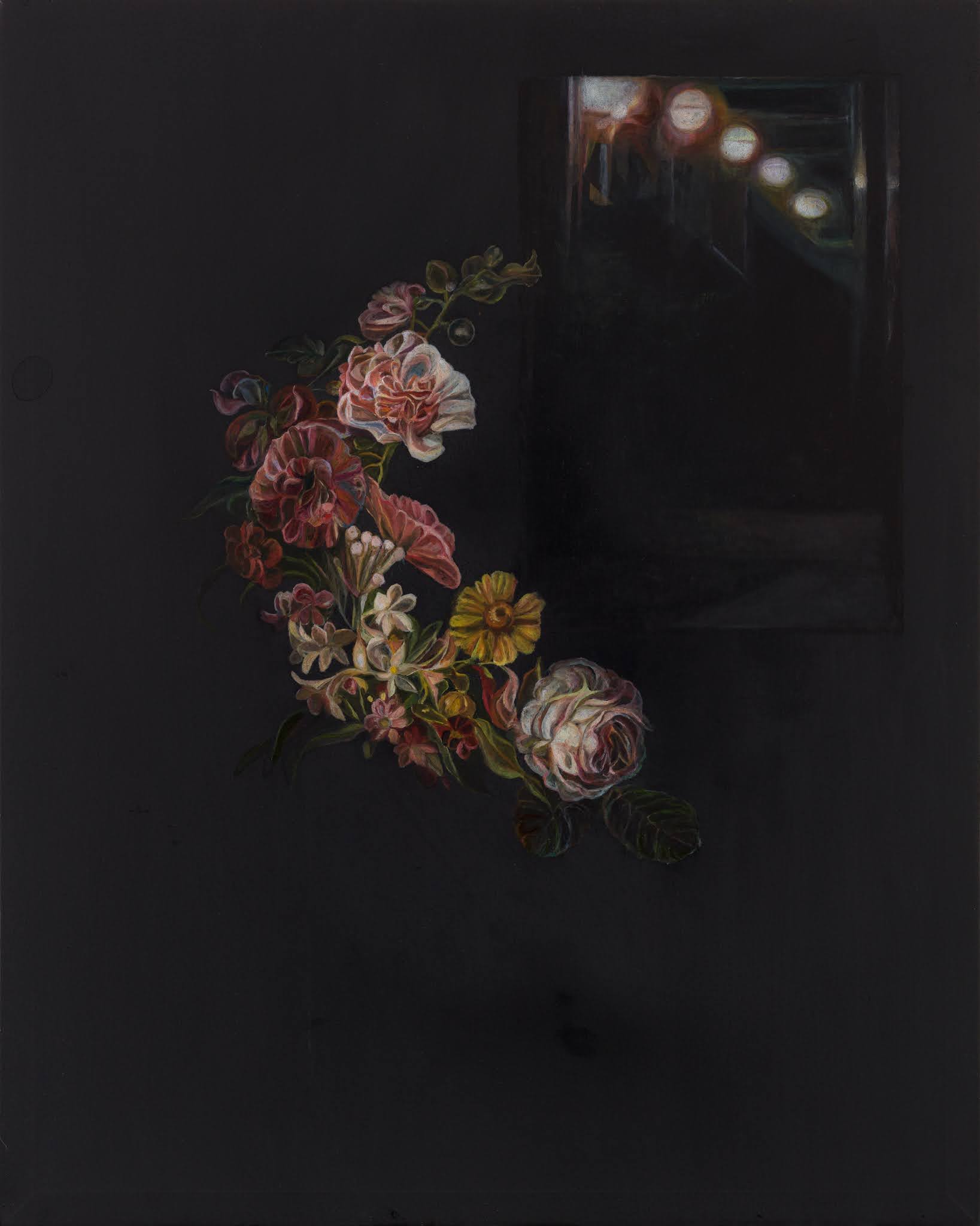
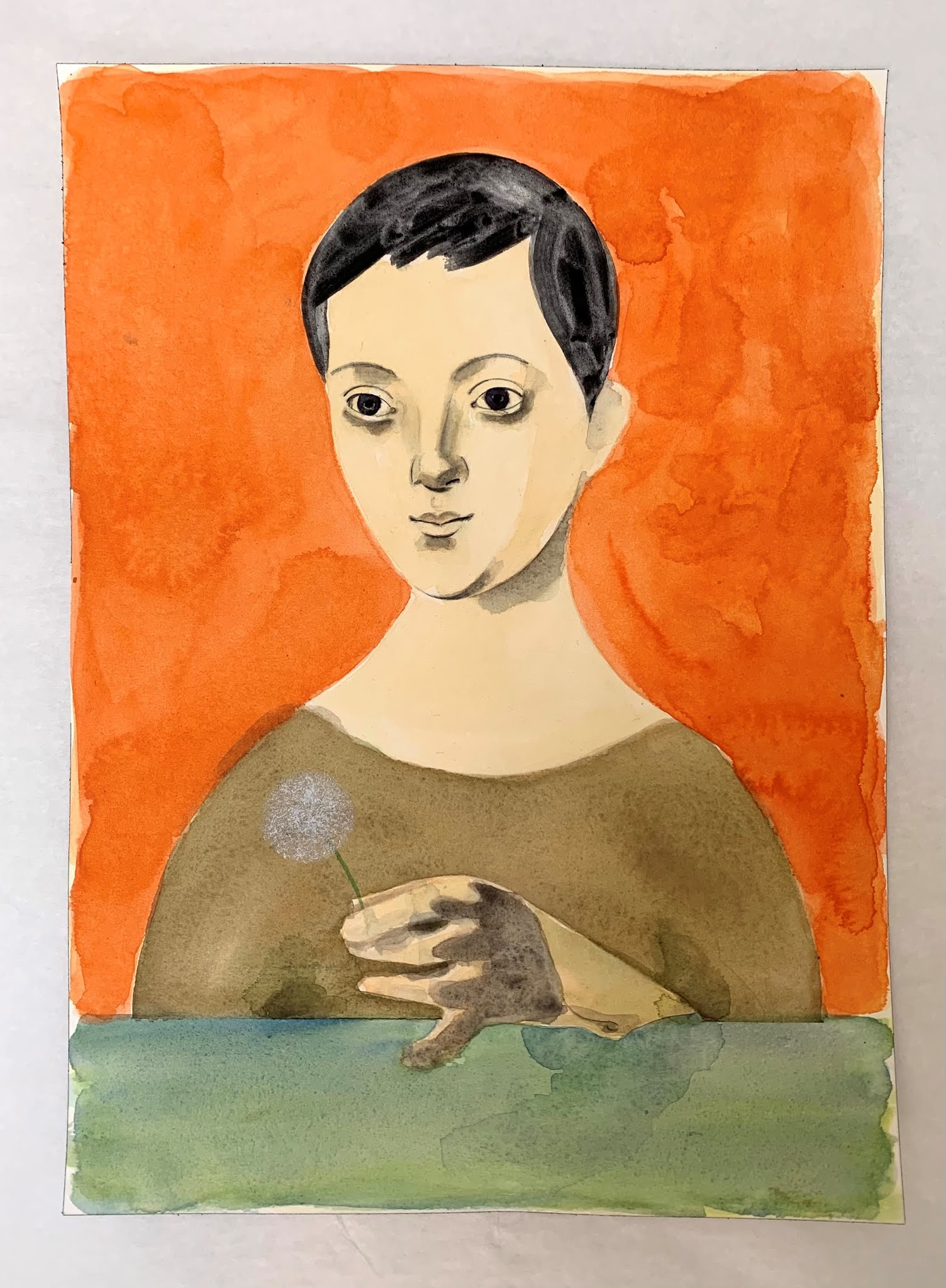
Kiera Bennett Punch, 2013 Oil on canvas 45x35cm


Kiera Bennett Poisoned, 2013 Oil on canvas 90x65cm


Kiera Bennett Jostle, 2013 Oil on canvas 90x65cm


Kiera Bennett Painting, 2013 Oil on canvas 90x70cm

Kiera Bennett Heap, 2013 Oil on linen 143x122cm


Kiera Bennett Melodrama, 2013 Oil on canvas 40x30cm


Kiera Bennett Urgency, 2013 Oil on canvas 90x75cm


Kiera Bennett Poisoned, 2013 Oil on canvas 40x30cm


Kiera Bennett Studio, 2013 Oil on linen 45x35cm

Kiera Bennett Painting, 2013 Oil on canvas 45x35cm


Kiera Bennett Painting (Jumper), 2013 Oil on canvas 45x35cm


Kiera Bennett Insomnia, 2013 Oil on canvas 90x75cm


Thursday, 28 March 2013


KIERA BENNETT

 The Making of an Anthropologist
Private View
Thursday April 4th 6.30-8.30pm

Exhibition Dates
Friday April 5th – Saturday April 27th 2013

Gallery Hours
Wednesday–Saturday 11am–6pm or by appointment


There are two distinct phases in a sunset. At first, the sun acts as an architect. Only later (when its rays are reflected and not direct) does it become a painter. As soon as it disappears behind the horizon, the light weakens, thus creating planes of vision which increase in complexity with every second. Broad daylight is inimical to perspective, but between day and night there is room for an architecture which is as fantastic as it is provisional. Claude Levi-Strauss, Tristes Tropiques, 1955

CHARLIE SMITH london is delighted to present Kiera Bennett in her first one person exhibition at the gallery.

Bennett is an elusive painter who adopts the tenets of early Modernism in order to paint the experience of contemporary life. Using as a starting point the everyday activities of an artist, Bennett begins with personal experience and the feelings that come with it. The fallible, the ridiculous and the romantic are wryly observed  as functions such as smoking, painting, lying around or partying become subject matter that is autobiographical and which is filtered through an instinctive selection process. This is defined by form and by a compulsion to make the fleeting and the fugitive permanent and immovable.

However, Bennett’s works are abstractions of that original experience, and through a process of reduction become paintings about painting. The formal attributes lead us superficially to early 20th century Modernism, but help to affirm a constant and cyclic relationship between Modernist and Postmodernist doctrines. Bennett adopts strategies of early Cubism by simplifying form into line and swathes of colour with striations, and by making numerous drawings and paintings of the same subject, which through initial observation and then repetition lead her to the ultimate rendition. A defined moment can become almost unidentifiable and each painting is current, timeless, and exists in acknowledgement of that which has been before and that which is yet to come.     

The emotive nature of the initial experience is of utmost importance to the artist, where a simple function becomes a gateway to a complexity of thought and feeling. Introspection, self-indulgence, escapism, nostalgia, identity, fantasy and reality are just some of the notions that Bennett relates to that original stimulus. But as she proceeds the painting becomes a cypher, symbolic of that first event and its related values. In place of the original meaning we are presented with line, shallow depth and confused space, providing an imagined psychological space that is fractured and dynamic. 

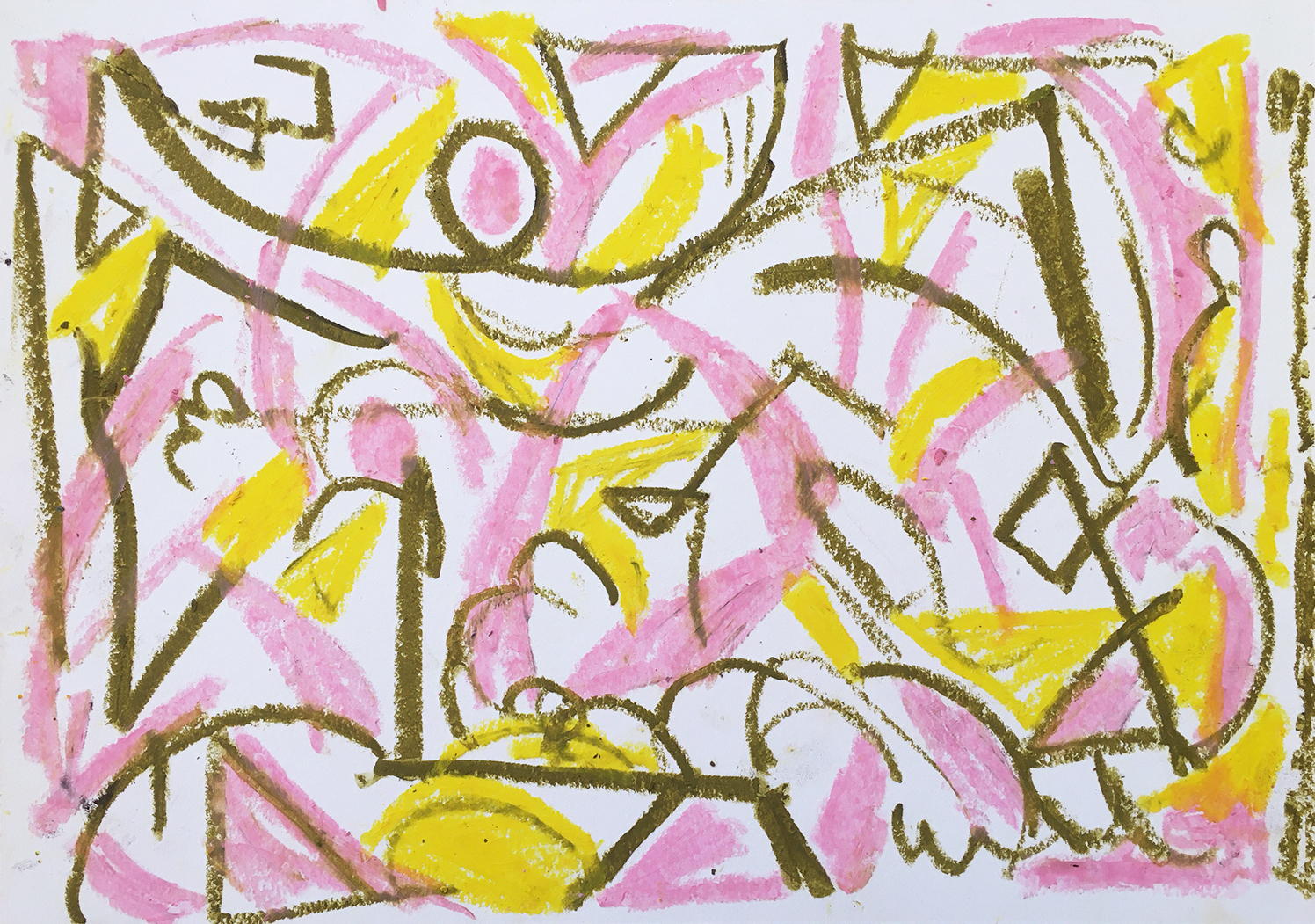
Kiera Bennett Insomnia, 2013 Oil on canvas 90x75cm

Kiera Bennett Painting, 2013 Oil on canvas 35x25cm


THE ORDER OF THINGS

Paul Eachus, Chris Jones, Alexis Milne, David Turley 

Saturday March 2nd – Saturday March 30th 2013  


Wednesday, 20 February 2013


THE ORDER OF THINGS

Paul Eachus, Chris Jones, Alexis Milne, David Turley

Private View
Friday March 1st 6.30-8.30pm

Performance
Friday March 1st 7.30-8.00pm | The Cult of Rammelzee (Alexis Milne, Jezza Ho, Luke Mozes, Tex Royale)

Exhibition Dates
Saturday March 2nd – Saturday March 30th 2013  

Gallery Hours
Wednesday–Saturday 11am–6pm or by appointment


A perambulator wheel, wire-netting, string and cotton wool are factors having equal rights with paint. The artist creates through choice, distribution and metamorphosis of the materials.
Kurt Schwitters, Der Sturm, 1919

The advent of collage and assemblage was arguably one of the most important developments in 20th century Modernism that led to the multiplicitous explosion of Postmodernism and current art practice. It has fundamentally influenced the nature of making and the use of materials since 1912 to the current day, from Picasso to Schwitters to Rauschenberg to Barbara Kruger, George Barber and recent Turner Prize winners Mark Wallinger and Elizabeth Price. The embracing of ‘low’, found and acquired materials and images was and is a method that elevates the process in itself as equal to the consideration of the final object. This enables the artist to appropriate from existing sources, thereby rendering the whole of culture, manufacturing and commerce as legitimate and direct source material.

This suggests an element of collaboration, or at least shared authorship, between artist and the originator of materials. The artist is in a sense curating his or her own works by researching, selecting, collating, appropriating and combining. Evident in the four artists featured in The Order of Things, they each employ similar drives to make manifestly different types of work. Similarly, the show as a whole can be seen as a collaborative artwork in itself, with dialogues between gallery director and artists allowing in places the former to influence the latter and vice versa.

Paul Eachus primarily makes photographs of constructions that he has assembled in his studio. By collecting various objects and arranging them specifically into conflicting fragmented narratives he forces a reinterpretation of things. Eachus takes from the real world and orders objects and situations that might otherwise be unrelated, and overloads the studio scene with obsessive repetition. The spectator is then denied first-hand experience of this set of events by being presented with a photograph rather than the installation itself, suggesting a desire to indicate information whilst preventing full disclosure. The process is revealed but the meaning of the constituent parts is not.

Chris Jones is also concerned with the fragmentation of assorted references, where multiple parts are collected, rearranged and reinterpreted. The Design of Pursuit is a large scale wall mounted collage. Images and form vie with each other to create a whole where we are uncertain of what is secondarily sourced and what is hand manipulated by the artist. Extraneous information is allowed to leak and merge until one part of the work infects the other. Referring to the interior of a cave where stalactites encumber the picture plane, The Design of Pursuit is a dynamic and complex piece that asks us to consider the correlation between the natural and man-made, and subsequently how we assimilate and process received information. There is a strong suggestion of the archaeological, both visually and figuratively, but equally we might be looking at a melting section of an obsessive’s information board.             

Alexis Milne combines video, installation and performance to investigate the roots of subcultural uprising, most recently that of Hip Hop culture. The Order of Things will feature a version of Your Eyes are Dead, which was recently exhibited at the International Film Festival Rotterdam in conjunction with Joey Ramone Gallery. Your Eyes are Dead utilises sampled and cut-up imagery to make a ritualistic meditation on the adverse urban conditions that enabled graffiti and B-Boy subcultures to take root and thrive. Collaging his own performance The Westway (featuring the Cult of Rammellzee), which pays homage to the first graffiti piece in London by New York’s Futura 2000; footage of Robert Moses’ Cross Bronx Expressway; and cult films that feature the South Bronx as a dystopian backdrop including Wolfen, Stations of the Elevated and Wildstyle, Milne presents an oblique investigation into the story of Hip Hop and the artist’s own relationship with it.

David Turley makes something closer to assemblage, where the collection or acquisition of the component parts is paramount to the creation of the final piece. Turley embraces the notion of chance, where unexpected meetings, dialogues or found / collected objects might lead him to the extent of moving countries in order to complete a work. Intrinsic to this process is a sense of unfolding narrative, where events and artist prompt and respond accordingly. Themes including memory, lost histories, religious ceremony and compulsion underpin his work, as initially disconnected acts, places and objects are combined to reveal underlying or unexpected interconnections. 


Paul Eachus The Time is Right, 2012 C-type print, diasec mount 77x91cm

 Paul Eachus Trans Chaosmos Facility 21 Photograph, felt tip, pencil, charcoal, ink on Somerset paper 29.5x21cm

Chris Jones The Design of Pursuit, 2013 Magazine & book images, board, paper 126x226x8cm

Alexis Milne Your Eyes are Dead, 2013 Video installation (13.40 mins)

David Turley  October 1966, 2013 35mm slide Dimensions variable


Thursday, 14 February 2013


YOUNG GODS | 2012 GRADUATES 

The Griffin Gallery 

10th January - 15th February 

Steven Allan (Royal College of Art)
Eyal Edelman (Camberwell College of Arts)
Andrew Leventis (Goldsmiths College)
Sikelela Owen (Royal Academy Schools)
George Rae (Central Saint Martins)
Christopher Kulendran Thomas (Goldsmiths College)
Sheila Wallis (City & Guilds of London Art School)


CHARLIE SMITH london Gallery 

11th January - 16th February

Eyal Edelman (Camberwell College of Arts)
Peter Georgallou (Royal College of Art)
Salome Ghazanfari (Goldsmiths College)
Adele Morse (Royal Academy Schools)
Jessica Rayner (Royal College of Art)
Christopher Kulendran Thomas (Goldsmiths College)


Wednesday, 19 December 2012

YOUNG GODS| 2012 GRADUATES

YOUNG GODS
2012 London Graduates
Curated by Zavier Ellis


IN ASSOCIATION WITH:

Winsor & Newton 
Liquitex 
Conté à Paris 
Griffin Gallery 
CHARLIE SMITH london
Tiger of Sweden 


THE GRIFFIN GALLERY


Private View
Wednesday January 9th 2013 6.30-8.30pm

Exhibition Dates
Thursday January 10th – Friday February 15th 2013 

Gallery Hours
Monday–Friday 2pm–5pm or by appointment 

The Griffin Gallery, The Studio Building, 21 Evesham Street, London, W11 4AJ


Artists 


Steven Allan (Royal College of Art)
Eyal Edelman (Camberwell College of Arts)
Andrew Leventis (Goldsmiths College)
Sikelela Owen (Royal Academy Schools)
George Rae (Central Saint Martins)
Christopher Kulendran Thomas (Goldsmiths College)
Sheila Wallis (City & Guilds of London Art School)


CHARLIE SMITH london 


Private View
Thursday January 10th 2013 6.30-8.30pm

Exhibition Dates
Friday January 11th – Saturday February 16th 2013 

Gallery Hours
Wednesday–Saturday 11am–6pm or by appointment 

CHARLIE SMITH london, 336 Old Street, 2nd Floor, London, EC1V 9DR


Artists 


Eyal Edelman (Camberwell College of Arts) 
Peter Georgallou (Royal College of Art) 
Salome Ghazanfari (Goldsmiths College) 
Adele Morse (Royal Academy Schools) 
Jessica Rayner (Royal College of Art) 
Christopher Kulendran Thomas (Goldsmiths College)


The 2012 edition of annual exhibition Young Gods will take place simultaneously across two locations in west and east London. Selected and curated by Zavier Ellis, director of Shoreditch gallery CHARLIE SMITH london and co-founder of THE FUTURE CAN WAIT, the exhibition will be a multi-disciplinary presentation of London’s most exciting graduates from the summer of 2012. Young Gods is presented in conjunction with the Griffin Gallery, supported by fine art brands Winsor & Newton, Conté à Paris and Liquitex.

Focusing on the theme of artists’ materials at the Griffin Gallery, this exhibition will include four painters in Steven Allan, Andrew Leventis, Sikelela Owen and Sheila Wallis. Sculptor George Rae will recreate his life-size clay tree Quercus Robur, and Eyal Edelman will produce a real time interactive performance / sound / projection piece that encourages the audience to interact critically and directly with the other work on show. 

Forming a bridge between the two sites, Edelman’s Everyone’s a Critic will be documented, edited and presented as a stand-alone video at CHARLIE SMITH london, alongside Peter Georgallou, who will make a floor to ceiling cycle driven loom that manufactures tweed; Salome Ghazanfari, who draws on street cults to make performance / video / installation; Adele Morse, who will present video and installation based on her search for the Orang Pendek species; and Jessica Rayner, whose multi-disciplinary work centres on expeditions to investigate the relationship between science, ecology and the human condition. Also showing at both sites will be Christopher Kulendran Thomas, whose complex political work draws partially on two main themes that run between the two shows: the nature of art in itself, and globalization. 

The exhibition promises to be a relevant focus on London’s most exciting future talent. Previous selections have included David Blandy, Leah Capaldi, Oliver Clegg, Inez de Coo, Annie Kevans, Alexis Milne, Nika Neelova, Ryan Riddington and Douglas White. 

Please contact CHARLIE SMITH london for images and further information 

Thursday, 29 November 2012

Sue Hubbard

Sue Hubbard

Girl in White: A reading followed by talk and discussion


Date 
Thursday December 6th 7.00-9.00pm

Location
CHARLIE SMITH london, 336 Old St, 2nd Floor, London, EC1V 9DR


The award-winning poet, art critic and novelist, Sue Hubbard, will be reading from and talking about the background to her acclaimed novel, Girl in White, based on the life of the early German Expressionist painter, Paula Modersohn-Becker (born in 1895) and her relationship with the celebrated poet Rainer Maria Rilke. This will be followed by a question and answer session led by the painter Dominic Shepherd, whose exhibition, Jerusalem will be showing in the gallery.

Fay Weldon has said of Girl in White that it is “a literary tour de force, you are the less for not reading it”.

John Berger has called it “a haunting novel.”

The work of Paula Modersohn-Becker is not much known in this country; though as a painter she was far ahead of her time and deserves a place alongside the likes of Gwen John and Frida Kahlo. Sue Hubbard has broadly followed the events of her life in order to give colour and texture to her singular existence, as well as place her against the background of her times in Germany where, after her death, her work was denounced as degenerate by the Nazis. Her intense relationship with the poet Rilke, whom she met in the artists’ colony of Worswede on the wild north German moors, her eventual marriage to the older academic painter Otto Modersohn, and her struggle to find a balance between being a painter, wife and mother are issues that many women can still relate to today. Paula died at the age of 31, from an embolism 6 weeks after giving birth to her daughter, Mathilde.  It is through the eyes of a fictional Mathilde, a young violinist who finds herself pregnant by her Jewish musician lover and forced to flee Berlin in 1933, that we learn of Paula’s story.

Please contact gallery for further information


Editor’s Notes:

Sue Hubbard is an award-winning poet, novelist and freelance art critic. Twice winner of the London Writers competition and a Hawthornden Fellow she has published two collections of poetry: Everything Begins with the Skin, (Enitharmon) and Ghost Station, (Salt) and a limited edition of poems illustrated by Donald Teskey: The Idea of Islands (Occasional Press, Ireland). Her first novel, Depth of Field, was published by Dewi Lewis and her acclaimed short story collection, Rothko’s Red, by Salt. The Poetry Society’s only official Public Art poet, she was responsible for London’s largest public art poem at Waterloo. Awarded two prestigious residences to Yaddo, USA, she was also the recipient of a major Arts Council Literary Award for her novel, Girl in White, published by Cinnamon Press. Her poems have been broadcast on Radio 3 and 4. 

GAVIN PARKINSON

Festival, or, First and Last of England

 Written for the current Dominic Shepherd one person exhibition Jerusalem


‘What is now proved was once, only imagin’d.’
William Blake, The Marriage of Heaven and Hell (c. 1790)
           
After the Olympics and in advance of Scottish independence (probably), we English are looking at England again: the things we thought and think it was; what we believe it became; what its futures might be. What constitutes England today? The question is instantly intimidating; it seems mired in difficulties to do with sentimentality, modernity, economics, and politics. In fact, it is all ‘politics’ of a kind: our dying, revived, beloved (of some) folk traditions might be just the creation of an affluent middle class (the Fakesong argument);[1] modern globalism might not allow space for independent, local, national cultures, which perhaps engender nationalism, parochialism, and racism anyway (the ‘little England’ argument);[2] capitalist consumerism and the mania for profit potentially crushes the life out of local events and rituals, reducing them to a set of saleable clichés by the very act of turning them into ‘culture’ (what could be more consumable?).[3] Might there be a set of activities and even a way of living – here in England and even in London – that is historically resonant and symbolically meaningful, permanent and transferable to a new generation yet carrying scope for development, pleasurable for all and not for profit, respected, admired by and inclusive of the non-English? Are we ready or willing, at the very least, to call ourselves English not British and feel that identification has some meaning beyond stereotypes? What does ‘England’ mean today? Is it – was it always – an illusion?

Well, yes: although no one would doubt that something like a geographical entity called ‘England’ exists (even though that, of course, was created by man not God), how ‘England’ signifies to the mind when the word is uttered is bound to be illusory in the sense of ‘not real,’ because it is a thing of the imagination and alters between individuals here and abroad. Say it to yourself and see what comes to mind. For England to mean something and not just ‘not America’ or ‘not France’ or ‘no foreigners’ or not whatever – even though it is precisely difference that we are getting at here: spirited yet cordial and civil independence – it is necessary to conjure a past of England that has some continuity today. This is not an academic or ‘cultural’ exercise, carried out to develop a career or to fill up the weekend. It is an act of daily pleasure, partly to do with taking in whatever buildings, weather, poetry, edgelands, dance, people, reservoirs, streets, music, beaches, suburbs, paintings, woodlands are available, and deciding what they mean here and now in England. It is an exercise of the imagination.[4]

The tondo or circular format for painting speaks directly towards certain cyclical ideas that have been a feature of life in England (and elsewhere in a different garb – the word derives from Italian) as long as historical memory. The most obvious is the cycle of the year, and the importance of regular rituals and festivals that once punctuated them. These helped people under often difficult conditions to alleviate austerity – the arrival of Christmas in the bleak midwinter being the obvious one, decked with holly, ivy, and rosemary to compensate for the lack of greenery – and rationalize and sustain passage through the seasons.[5] The form is reflected directly in the events themselves such as the dance around the Maypole and in circles of stones and ceremonial and occultist circles.

Dominic Shepherd’s use of the tondo for his painting The Well seems directly inspired by such symbolism, but it receives an extra spin of the wheel by means of its multiple references to the English past (the so-called ‘well of history’). These are looked down and back upon like liquefied, ungraspable events, here, though in evoking the incomplete past in the mind’s eye, notice that we are also looking in upon ourselves. Shepherd’s remark on history in The Well seems to be that it is analogous to the activity of the seer or medium seeking the future by making sense of the initially indistinct figures in a crystal ball. We divine the future by plumbing our own memories, biographical and historical; we look into the past by looking into ourselves and vice versa so that past and present, personal and collective, up or down (the tondo having neither) cease to be distinct. The circular form of The Well and the fluid and watery rendering of its paint also recall the connected activity of divination through reading tealeaves or coffee grounds.

Additionally, the tondo calls up a temporality that is not linearly progressivist, as has been the norm in the West from Renaissance humanism through to Enlightenment optimism and nineteenth century positivism, to subsequent theological, philosophical, and economic systems, scientific theories, and political positions that insist upon a history of the advancement of civilization as a backdrop and justification for aspiratory, accumulative, utilitarian ends.[6] Rather, the chronology that sections temporality into a past, present, and future is challenged by utopian ideas, which seek instead a Golden Age, Arcadia, or pastoral that exists through cyclical time. Working to overlap and interleave individuals, places, and events supposedly temporally distant, cyclical time aims at ‘creating connections to the past, establishing familial and locational ties,’ in Shepherd’s words.

His rejection of materialist progressivism and embrace of cyclical time and ritual gives onto an iconography of people involved in seasonal chores and bucolic undertakings in Shepherd’s paintings: ‘chopping wood, harvesting, riding horses, burning effigies, hanging out at festivals’ as he says. Beyond this, the collapse of linear time that brought about paintings like The Family allows encounters between Guy Fawkes and the Incredible String Band, Romantic poets and Morris Dancers, witches and hippies, William Blake and Pearly Kings and Queens, the New Model Army and the radical movements of the sixties, and, well, Levellers and the Levellers, at a metaphorical banquet or feast; or perhaps, better, a festival, in which the first and last of England meet in the imagination – where Shepherd himself meets his own predecessors Blake and Richard Dadd – though who is first and who last is impossible to say, depending always on the next spin of the tireless tondo.
Gavin Parkinson
5 November 2012


[1] Dave Harker, Fakesong: The Manufacture of British Folksong, 1700 to the Present Day, Milton Keynes: Open University Press, 1985; Bob Pegg, Folk, London: Wildwood House, 1976.
[2] Mark Perryman, Imagined Nation: England After Britain, London: Lawrence & Wishart, 2008, 86-139.
[3] For a recent critique of the politics and rhetoric of ‘economic growth,’ see Robert Skidelsky and Edward Skidelsky, How Much is Enough? The Love of Money and the Case for the Good Life, London: Allen Lane, 2012.
[4] For a meditation on England’s overlooked urban corners, see Paul Farley and Michael Symmons Roberts, Edgelands: Journeys into England’s True Wilderness, London: Jonathan Cape, 2011.
[5] See Ronald Hutton, The Stations of the Sun, Oxford: Oxford University Press, 1996.
[6] For an analysis of some fatal consequences of progress, see Ronald Wright, A Short History of Progress, Edinburgh: Canongate, 2005.

Thursday, 15 November 2012


DOMINIC SHEPHERD

Jerusalem

Private View
Thursday November 22nd 6.30-8.30pm

Exhibition Dates
Friday November 23rd – Saturday December 22nd 2012  

Gallery Hours
Wednesday–Saturday 11am–6pm or by appointment


The road of excess leads to the palace of wisdom
William Blake

In William Blake’s poem ‘Jerusalem’ the 18th century visionary asks whether Jesus Christ once visited England, as legend has suggested. And he asks, ‘was Jerusalem builded here, Among these dark Satanic Mills’? In doing so Blake condenses over a thousand years of history by visualising Jerusalem - or heaven - in the contemporary landscape of early industrialisation, and in England. The phrase ‘dark Satanic Mills’ belies Blake’s concern about the development of society, where relentless industrial and capital progress became a clear and prevailing threat to the individual and the spiritual. The perceived loss would be the pastoral, idyllic lifestyle defined by natural simplicity. At least, this is the view that returns in cycles throughout history and is recalled again by Dominic Shepherd.

Shepherd’s paintings represent a contemporary visualisation of the Golden Age, that idealised, mythical time in Arcadia of innocent pleasure. As with Blake’s ‘Jerusalem’, it is a place similar to Eden, that resonates with any individual who longs to remove himself, as Shepherd has done, from the flux of city life – from the industrial and technological. But the Latin phrase ‘Et in Arcadia ego’ warns us that ‘Even in Arcadia, I [death] am there’. And similarly Shepherd shows us that fear and loss also inhabit these mythical, idyllic worlds. Drawing on folklore and the transference of wisdom through festival and ritual, Shepherd depicts his subjects performing such rites. ‘The ghosts of England’ - Pearly Kings, Morris dancers, romantic poets, gurus - occupy his paintings, ‘working, singing or dying to create a New Age of Romantic pastoralism’. However, these pastoral revivalists twist and implode in the midst of Epicurean hedonism and counter cultural zeal.               

Shepherd’s recent reintroduction of the tondo and of trompe l’oeil frames painted within the picture plane serve to help the illusion of observing this other world. We are quite literally given windows – or perhaps mirrors – that invite us to witness the rituals within his elaborate alternative reality. Personal memory, cultural and political history, dream, imagination and the hallucinatory are drawn on to form symbols, obscure meanings, suggested narratives, and allusion to the arcane. This invented domain is the artist’s New Jerusalem.